

Rekeying vs. Lock Replacement: What Atlanta Property Managers Actually Do
Cylinder condition, hardware grade, and turnover rate dictate your make-ready lock decisions.
- Serving Atlanta Since 1900
- BBB A+ Rated
- Alpharetta Storefront & Showroom
What Atlanta Property Managers Do After Move-Outs
Rekeying is the right answer at most unit turnovers, but not all of them.
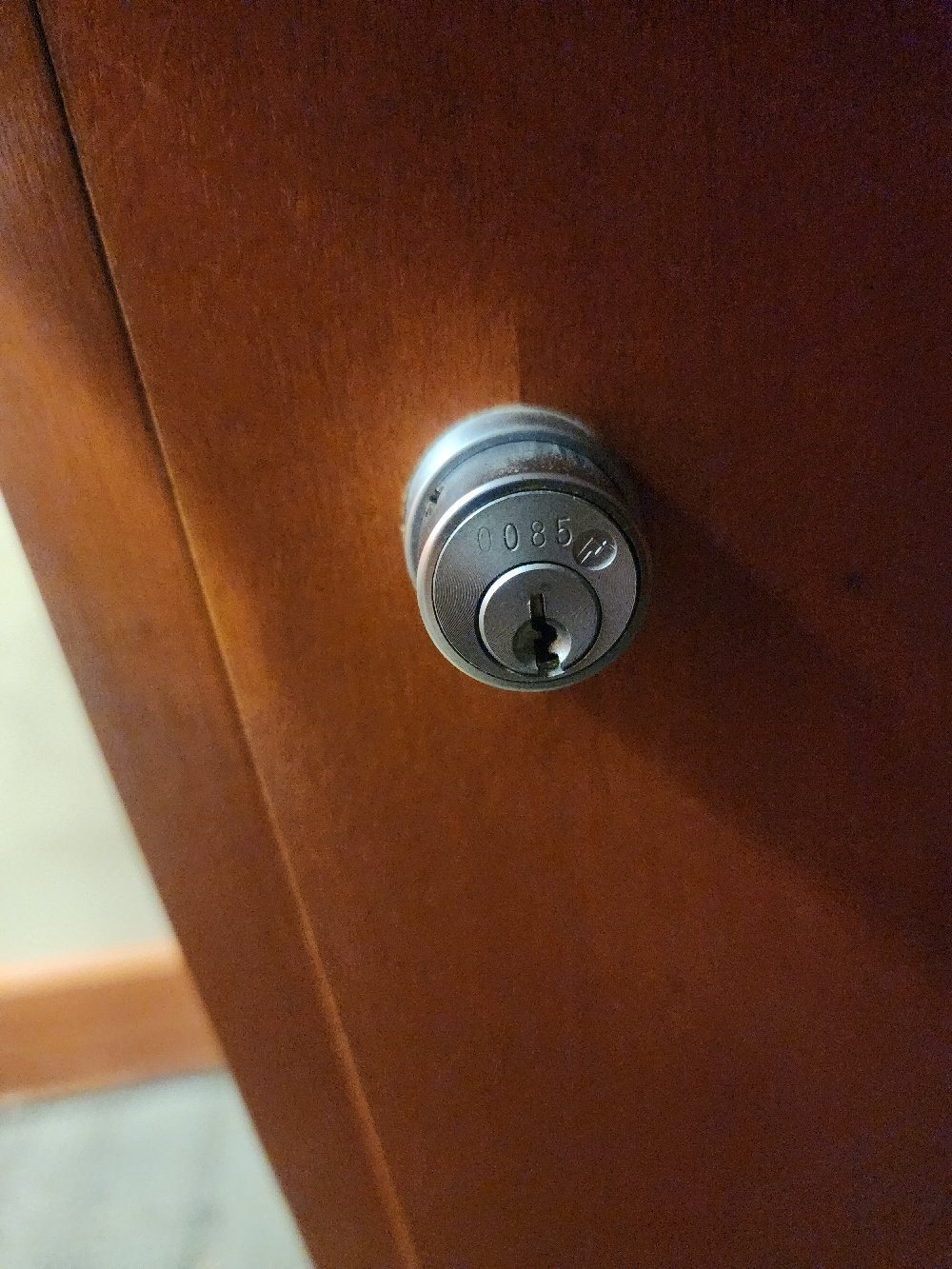
The make-ready process prepares a vacated rental unit for its next tenant. This process always includes multi-family lock rekeying or lock replacement. Rekeying changes the internal pin configuration of an existing cylinder. Only the new key operates the lock.
Lock replacement swaps out the cylinder or entire lockset with new hardware. Rekeying costs less. Replacement takes longer and costs more. Choosing wrong in either direction has a strict dollar consequence. This guide walks through the three variables that determine the right call.
Why High-Turnover Areas Need a Different Strategy
High-turnover submarkets demand a different decision framework than stable, low-turnover properties.
Atlanta's apartment corridors are not all the same. Properties in Buckhead, Sandy Springs, and Johns Creek see massive annual turnover rates. More move-outs per year means more rekeying events per cylinder.
Each rekey puts additional wear on the cylinder. A cylinder rekeyed six times in four years experiences six pin-setting operations. That mechanical repetition compresses springs and wears key plug tolerances faster.
A property in Cumming with stable tenants may rekey a unit twice in five years. A 300-unit community in Sandy Springs might rekey every unit annually. The cylinder in the Sandy Springs unit works harder. Its service life burns much faster. The threshold for replacement arrives sooner.
Three Variables That Determine the Right Call
Every make-ready lock decision comes down to cylinder condition, hardware grade, and turnover frequency.
Physical Cylinder Condition
Cylinder wear is the first thing a locksmith assesses before performing a rekey.
Cylinder wear is the physical degradation of a lock from repeated key insertions. A worn cylinder has visible and tactile indicators. You will notice binding, a gritty turn, inconsistent latching, or key plug side-play.
A worn cylinder that gets rekeyed will likely bind mid-lease. You then pay for a service call addressing a problem present at the original make-ready. The financially correct answer is to identify the worn cylinder early. We replace it at the scheduled visit while the technician is already on-site.
Commercial Hardware Grade
Hardware grade determines how much life a cylinder has before wear becomes controlling.
Properly maintained Grade 1 cylinders sustain hundreds of thousands of key cycles. They handle multiple rekeying operations before reaching the end of service. Grade 3 residential hardware reaches that threshold much sooner.
When a property was built with Grade 3 hardware, rekeying eventually becomes a replacement conversation. For high-turnover communities, this crossover point arrives within the first decade. Property management lock maintenance heavily depends on accurate hardware grade identification.
Property Turnover Rate
Turnover rate determines whether a scheduled rekeying program makes more financial sense.
A property with 20% annual turnover cycles through roughly one in five units yearly. A property with 60% turnover rekeys three in five. At high turnover volume, reactive dispatch creates expensive scheduling gaps.
A scheduled rekeying program totally eliminates both scheduling gaps and unpredictable costs. The locksmith knows exactly when to be at the property. The manager knows what each turnover event costs. The cost math favors scheduled programs at high turnover rates.
Real Make-Ready Scenarios for Property Managers
Three realistic scenarios show how these variables combine practically on-site at the unit level.
High-Turnover Unit With No Visible Wear
A 90-unit apartment community in Sandy Springs has a massive 55% annual turnover rate.
A unit turns over. The Grade 3 cylinder shows absolutely no wear. This cylinder can be rekeyed today. However, this unit will likely see another make-ready within 18 months. The manager should plan for total replacement during the next scheduled cycle.
Low-Turnover Unit With Heavy Grade 1 Hardware
A long-term tenancy property in Milton sees one turnover every four to five years.
The heavy Grade 1 cylinder shows absolutely no wear. We simply rekey it. The cylinder has substantial service life remaining. Replacement would heavily run up the make-ready budget without adding any operational benefit.
Any Turnover Rate With Visible Cylinder Wear
Hardware grade and turnover rate are secondary when the physical cylinder heavily binds.
The cylinder is entirely past its reliable service life. Rekeying it produces a short-term result leading directly to a mid-lease service call. The financial consequence of a tenant callback costs more than the replacement hardware.
What We Tell Atlanta Property Managers
I constantly field this make-ready question from property managers across the Metro Atlanta area.
I am Tracy Brown, owner of Downs Locksmith & Security. Property managers ask this on almost every scheduled service call. The answer gets complicated when the make-ready schedule is under pressure.
The instinct is to rekey everything quickly and simply move on. That works fine when the cylinders remain in good shape. It catches up with you when they are worn out. A high-turnover community needs a locksmith who assesses the cylinder before proceeding. We provide honest apartment and community locksmith services to avoid reactive callbacks.
Resolving Close Calls on Make-Ready Locks
A hands-on professional hardware assessment easily resolves the close make-ready property management calls.
You do not need a professional to make this call at every unit. Rekey a cylinder that operates cleanly and has service life. Replace a cylinder that heavily binds or shows spring softness.
Schedule an assessment if your community has aging Grade 3 hardware. The Georgia Landlord-Tenant Act requires landlords to strictly maintain habitable premises. A cylinder that fails mid-lease is a heavily documented habitability gap. Proactive assessment fixes it before it becomes a legal complaint.
Securing Community Amenity Areas and Pool Gates
We handle complex property management access requirements beyond standard apartment residential doors.
Our technicians reliably secure heavily trafficked amenity area locks and delicate pool gate locks. We perform rapid gate lock repair for high-traffic neighborhood entrances. Community and apartment gate access control requires durable, weather-resistant hardware to operate flawlessly.
Proper amenity building security actively prevents vandalism in shared community spaces during off-hours. We also design custom master key systems for property managers. This ensures your local maintenance team carries one secure restricted key.
Serving Metro Atlanta Multi-Family Communities
Downs dispatches property management lock services directly from our physical Alpharetta storefront.
We strictly operate out of 520 S. Main St in Alpharetta. We securely serve multi-family communities across Fulton, Cobb, DeKalb, and Gwinnett counties. Property managers across Buckhead, Sandy Springs, Johns Creek, and Roswell trust us daily.
Our fully loaded commercial trucks also cover Forsyth, Cherokee, Bartow, and Henry counties. A single dispatch point reliably covers multiple submarkets without requiring separate vendor relationships. We strictly operate during normal business hours and do not offer emergency dispatch.
Schedule Your Next Make-Ready Lock Service
Detailed property information rapidly accelerates how we schedule the right service for your community.
Have your exact property address and an estimate of units turning over ready. Let us know your approximate annual turnover rate. This variable definitively tells us if a scheduled rekeying program makes sense.
Call (404) 873-2515 or directly email [email protected] to confidently start the conversation. All property management and apartment locksmith services strictly occur by scheduled daytime appointment. We do not provide after-hours emergency response or mobile vehicle service.